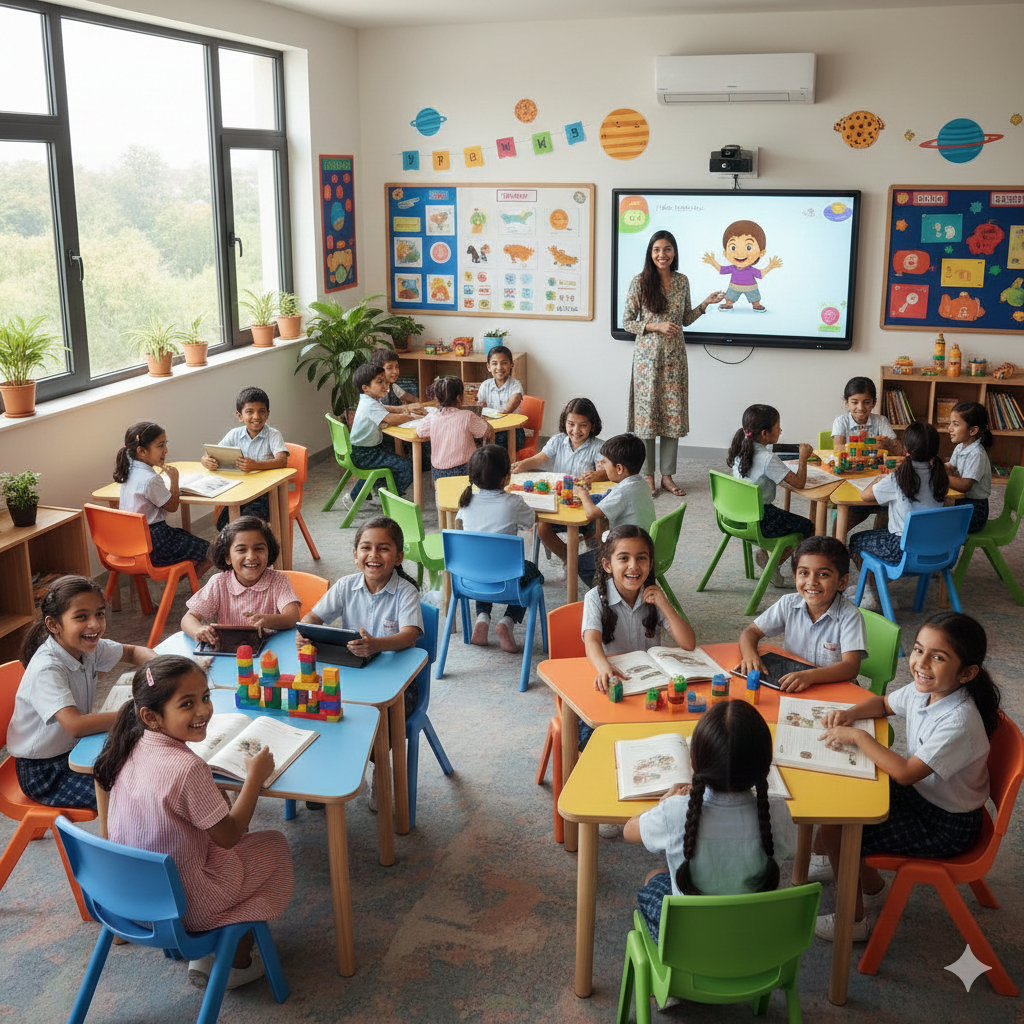
If you are a parent in India today, you’ve probably heard teachers, schools, and WhatsApp groups talking about NEP 2020.But let’s be honest — most parents are still confused. As parents, we don’t need complicated policy language.We need clarity, practical impact, and peace of mind. So in this blog, let’s understand NEP 2020 in simple words — only what truly matters for your child and your family. What Is NEP 2020, in Simple Terms? NEP 2020 stands for New Education Policy 2020.It is India’s biggest education reform in over 30 years. The main idea is very simple: Move from rote learning and marks-only pressure to skill-based, concept-based, and joyful learning. Instead of asking children to: NEP focuses on: Biggest Change Parents Will Notice: New School Structure Earlier system:10+2 (10 years school + 2 years senior secondary) New NEP system:5 + 3 + 3 + 4 Let’s understand this with age: 🧒 Foundational Stage (Age 3–8) 👉 Good news for parents:Early years focus on confidence and curiosity, not books only. 📚 Preparatory Stage (Age 8–11) 🧠 Middle Stage (Age 11–14) 🎓 Secondary Stage (Age 14–18) Are Board Exams Removed? (Big Parent Question) No. Board exams are NOT removed. But they are being reformed. What’s changing: 👉 This means:Your child doesn’t lose everything due to one bad exam day. Marks vs Skills: What NEP Really Wants NEP does not say marks are useless.It says marks should not be the only measure of intelligence. Schools are now encouraged to focus on: 👉 As parents, this is a positive shift, especially for children who: Language Policy: Mother Tongue Confusion Cleared NEP does NOT force any language. What it recommends: English: 👉 Parents don’t need to panic.Most CBSE and English-medium schools are implementing NEP balanced with practicality. How NEP 2020 Helps Your Child’s Future Let’s talk honestly as parents. Today’s world needs: NEP prepares children for: It reduces: What Parents Should Do Now (Very Important) You don’t need to:❌ Change schools in panic❌ Overload children with extra classes❌ Compare your child with others Instead:✅ Talk to your child’s school✅ Ask how they are implementing NEP✅ Encourage learning beyond marks✅ Focus on habits, not just results Final Thoughts: Is NEP 2020 Good or Bad? Every change feels uncomfortable at first — especially when it involves our children. But NEP 2020, when implemented correctly, is a step in the right direction. As parents, our role is not to resist change, but to: Because education is not about creating toppers —it’s about creating capable, confident human beings.
Is Your Child’s New Tutor a Bot? AI is Changing Homework in 2025
The kitchen table homework battle has changed. It’s no longer just you versus algebra. Now, there’s a third party at the table: Artificial Intelligence. Here is every parent’s guide to navigating the new reality of personalized AI learning. It’s 7:00 PM on a Tuesday in late 2025. Your fifth grader is slumped at the kitchen table staring at a tablet. But they aren’t watching YouTube. They are grappling with fractions. Ten years ago, you might have leaned over, dusted off your own rusty math skills, and tried to explain “common denominators” without causing a meltdown. Today, before you can even offer help, a friendly avatar pops up on their screen, notices they’ve paused for too long, and says, “Hey Leo, looks like adding these fractions got tricky. Remember how we sliced that virtual pizza yesterday? Let’s try that again.” Leo clicks, reviews a 30-second personalized refresher video, attempts the problem again, and gets an immediate green checkmark. Crisis averted. Welcome to homework in 2025. The era of one-size-fits-all worksheets is rapidly ending, replaced by hyper-personalized, AI-driven tutoring platforms. But as parents, this shift leaves us with nagging questions: Is a “bot tutor” actually good for my child? Are they learning, or just clicking? Let’s break down how AI personalization is reshaping education right now, and how you can manage it at home. What is an “AI Tutor” in 2025, Anyway? It is crucial to distinguish between a generic chatbot (like basic ChatGPT) that just spits out answers, and the sophisticated Adaptive Learning Platforms that schools are now integrating. In 2025, an “AI tutor” isn’t just a homework helper; it’s a learning GPS. Imagine traditional teaching as a bus route: everyone goes to the same stops at the same time. If you miss the bus, you’re left behind. AI tutoring is like Waze or Google Maps for learning. It knows exactly where your child is currently located academically, it knows the destination (mastering the concept), and it recalculates the route the moment they make a wrong turn. These platforms analyze thousands of data points—how long your child hesitates on a question, which types of mistakes they repeatedly make—to build a unique profile of how they learn best. The Good News: Why Schools Are Embracing the “Bot” Educators aren’t trying to replace themselves. They are using these tools to solve age-old classroom problems. 1. Closing the “Swiss Cheese” Gaps Every student has “holes” in their foundational knowledge—like Swiss cheese. Maybe they missed the week decimals were taught in 3rd grade. Those holes make future math impossible. A human teacher with 30 kids can’t find every hole. An AI tutor can identify a gap from two years ago and patch it before moving on to current homework. 2. The End of Homework Anxiety (Sort of) Nothing kills confidence faster than staring at a worksheet you don’t understand for an hour. AI tutors provide immediate, low-stakes feedback. It feels much less judgmental to get a “Try again!” from a cartoon avatar than a red “X” from a teacher days later. This encourages kids to take risks and view mistakes as part of learning. 3. Meeting Advanced Learners Where They Are On the flip side, if your child masters a concept quickly, the AI doesn’t make them do 20 more repetitive problems. It recognizes mastery and serves up a more challenging concept, keeping them engaged instead of bored. The Elephant in the Room: Parental Worries If this all sounds too good to be true, you’re right to be skeptical. The integration of AI tutors comes with real parenting challenges. The Cheating vs. Using Question: The biggest fear in 2025 is still: Is the AI doing the thinking for them? There is a massive difference between an AI that guides a student toward an answer via Socratic questioning (good) and one that just solves the equation when asked (bad). The “Zombie Mode” Screen Time: We are already fighting a losing battle against screens. Does homework really need to be digital too? The risk is that children enter passive “zombie mode,” just clicking until they get the right answer without actually processing the information. The Loss of Human Grit: Part of learning is struggling through something difficult until you have an “aha!” moment. If an AI bot jumps in the second a child struggles, are we robbing them of the chance to develop resilience and grit? Your 2025 Action Plan: Parenting in the Age of AI Tutors You don’t need to be a tech expert to manage this. You just need to be an involved parent. Here is your playbook for the new homework reality. 1. Audition the “Tutor” Don’t just let your kid log in. Sit down with them for 15 minutes. Watch how the program works. 2. Shift from “What did you get?” to “How did you get it?” When checking homework, don’t just look for green checkmarks. Pick two problems and ask your child to teach you how they solved them without looking at the screen. If they can’t explain the concept in their own words, the AI did the heavy lifting. 3. Enforce “Analog Intervals” Brain science tells us we need offline time to consolidate memories. If homework is on a screen, ensure that the hour after homework is totally disconnected—playing outside, reading a physical book, or helping with dinner. 4. Praise Effort, Not Tech Prowess The AI is designed to make learning efficient, but don’t let your child confuse speed with smarts. Praise them when you see them frustratedly working through a tough module—that’s where the real learning happens, bot or no bot. The Bottom Line In 2025, the AI tutor is a powerful power tool in your child’s educational toolbox. But like any power tool, it requires supervision to be used safely and effectively. The goal isn’t to raise children dependent on bots to think for them; it’s to use bots to help raise children who are confident, capable thinkers on their own.
How Local Influencers from Lucknow Are Shaping Parenting and Educational Brands in 2025
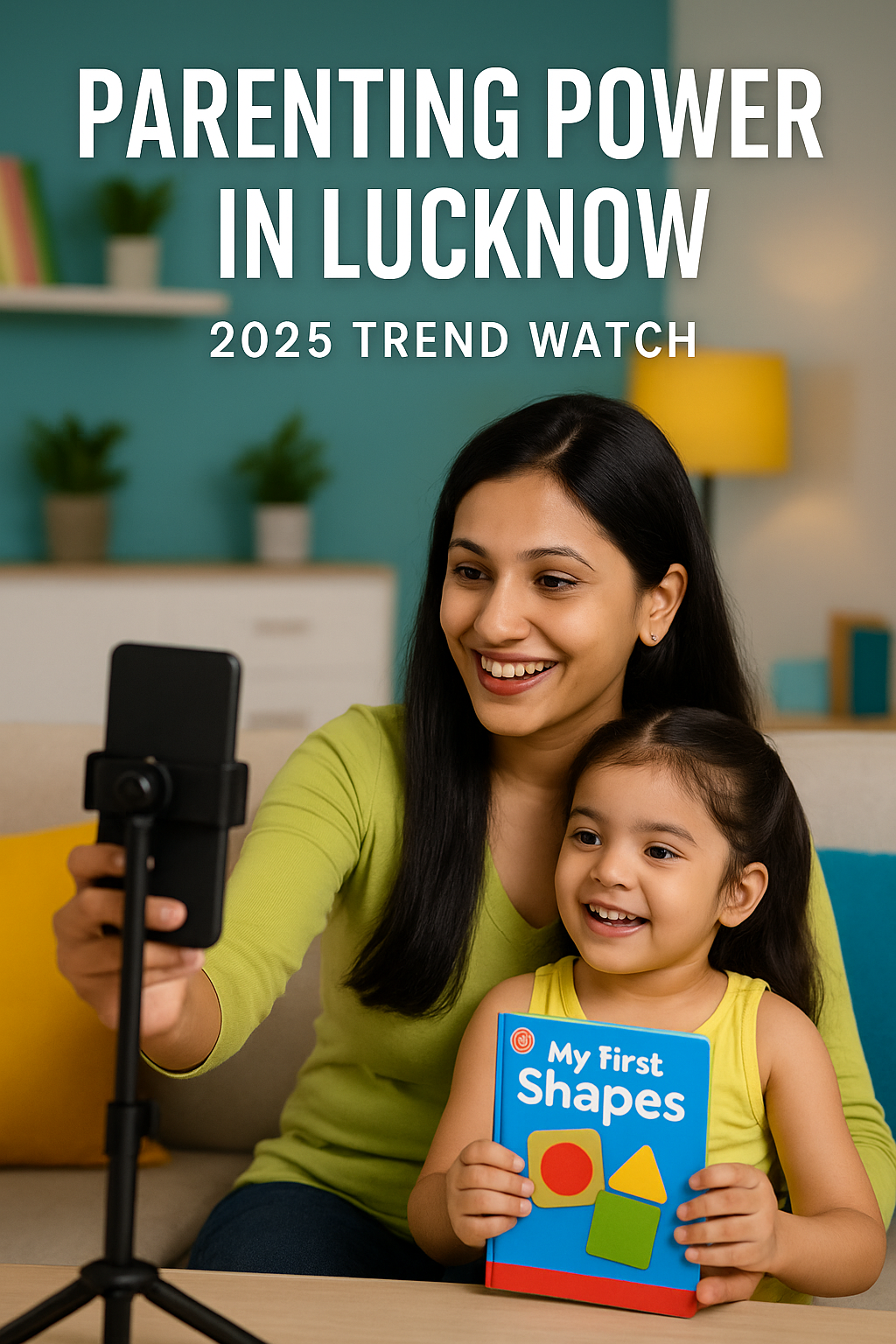
Why Lucknow? As Tier-2 cities become digital hotspots, Lucknow has quietly emerged as a content creation hub, especially for lifestyle, education, and parenting niches. From mommy bloggers and student motivators to ed-tech influencers, the city is buzzing with relatable, homegrown talent. The Power of Regional Influence Unlike metro-based influencers who cater to broader, often disconnected audiences, Lucknow influencers connect emotionally with parents and students. Their language, cultural alignment, and value-driven content lead to stronger engagement and purchase decisions — especially in areas like school supplies, extracurricular services, books, and kids’ clothing. Popular Influencer Niches in Lucknow How Schools and Local Brands Can Benefit If you run a school, tuition centre, or kids’ eCommerce brand, these influencers can: Influencer Marketing Tips for Local Brands Noteworthy Influencers from Lucknow (Source: Modash / Related Directories) Amita Kanak Adya Srivastava Other notable creators with substantial Lucknow audiences identified by Modash: Local Food & Lifestyle Influencers (from Modash food category) @sincerelyaliii (Aliza Khan) @discoverlucknow (Mohd Atiq) @makeoverbyaanchalbhatia 🏡 Home, Lifestyle & Parenting Influencers (via Influglue) Navpreet Samir Priyanka Final Thoughts In 2025, your school or parenting product doesn’t need a Bollywood star to go viral. It just needs the right voice from your city. And that voice may already be speaking to your ideal audience — on Instagram, YouTube, or Moj. Stay local. Stay authentic. And let your message grow — one reel at a time.
Want Smarter Kids? This Balanced Parenting Style Might Be the Key, Says Study
In today’s world of gentle parenting, mindful conversations, and emotional coaching, one might think the age of strict parenting is over. But a new British study suggests otherwise—and the results are surprising. According to the SEED (Study of Early Education and Development) research project in the UK, children raised with an “authoritative parenting style”—a healthy blend of structure, warmth, and responsiveness—tend to show greater academic success and stronger emotional development between the ages of 7 to 11. So, should we bring back the chore charts and bedtime rules? Let’s break it down. What Is Authoritative Parenting? Authoritative parenting is not the same as authoritarian parenting. It doesn’t mean yelling or demanding obedience without discussion. Rather, it means: This approach builds discipline while also giving children a safe emotional space to express themselves. What Is Authoritative Parenting? Authoritative parenting is not the same as authoritarian parenting. It doesn’t mean yelling or demanding obedience without discussion. Rather, it means: This approach builds discipline while also giving children a safe emotional space to express themselves. Emotional Stability Is the Secret Sauce Even with the best routines, a home filled with stress or parental anxiety can disrupt a child’s development. The study revealed that: “Parental distress, conflict, or chaotic home life leads to lower socio-emotional outcomes.” That means yelling, emotional inconsistency, or a lack of connection—even in a structured home—can harm a child’s mental well-being. So yes, discipline is important. But empathy and emotional regulation from parents are the foundation. Key Takeaways for Modern Parents If you’re a parent wondering how to balance love and discipline, here’s what you should focus on: 🏡 Create Structure 💬 Practice Emotional Responsiveness 🎯 Encourage Independence 👩🏫 Support Learning Why This Matters in 2025 In the digital era, children are exposed to more distractions and emotional pressure than ever before. While gentle parenting offers emotional safety, a lack of structure can leave children unprepared for the real world. That’s why the authoritative style is trending again—especially among conscious, modern Indian parents looking for long-term growth, not just temporary obedience. Final Thoughts There’s no single “perfect” parenting formula. But if you’re aiming to raise a child who is not just well-behaved, but also academically strong and emotionally intelligent, balance is key. Structure without love is harsh.Love without structure is chaos.Authoritative parenting is the middle path—and science backs it. 🔗 Follow MySchoolKids for more parenting insights, expert advice, and school support resources.📲 Visit www.myschoolkids.com for educational tools, activity kits, and parenting workshops.
Top Trending Smartphones in India July 2025
As parents and tech enthusiasts, finding the perfect smartphone—whether for yourself, your kids, or as a gift—can be overwhelming in today’s fast-moving mobile market. The Amazon Prime Day 2025 and Flipkart Mid-Year Sale made July a blockbuster month for smartphone deals. In this post, we’ll walk you through the top trending mobile phones in India in July 2025, based on real sale data, customer demand, and online buzz across Amazon and Flipkart. If you missed the sale, don’t worry—we’ve also included links and tips on where to find these devices now at great prices. Top 10 Trending Smartphones in July 2025 (India) Here’s our curated, research-backed list of the most trending smartphones on Amazon and Flipkart, based on what India actually bought. 1️⃣ Apple iPhone 15 (128 GB) 2️⃣ Samsung Galaxy S24 Ultra 5G 3️⃣ OnePlus 13R / OnePlus 13 4️⃣ Nothing Phone 2a Plus 5️⃣ Samsung Galaxy A55 5G 6️⃣ Vivo V50 5G 7️⃣ Samsung Galaxy Z Fold 7 5G 8️⃣ Samsung Galaxy Z Flip 7 FE 5G 9️⃣ Motorola Edge 60 Fusion 5G 🔟 Vivo T4 5G / T3 Pro 5G Quick Tip: Where to Buy Now Even after the July sales, these phones are still available on Amazon and Flipkart with EMI and exchange offers. For school-going kids, consider pairing with parental control apps or durable phone cases from our Tech for Kids section. What This Means for Indian Buyers in 2025 Final Thoughts Choosing the right phone depends on who it’s for and how it’s used. Whether you’re a parent looking to upgrade your own device, or buying a smartphone for your teenager or school-going child, July 2025 is the best time to grab great deals—and many are still live! At MySchoolKids.com, we believe in simplifying decisions for parents. That’s why we’ve got you covered not just on mobile tech, but also on school books, stationery kits, kid-friendly gadgets, and more.